Monday brief
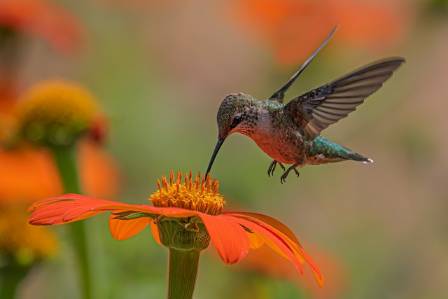
Hummingbirds have underdeveloped legs, so they cannot walk
North America is home to 18 species of hummingbirds. These extraordinary birds occur naturally only in the Americas, including North, Central, and South America.
Elvia Laurent
Desk note
Brief tip
The full sticky-note brief continues below on the Monday desk.
Board
Desk Notes
North America is home to 18 species of hummingbirds. These extraordinary birds occur naturally only in the Americas, including North, Central, and South America.
The longest documented lifespan of a wild hummingbird belongs to a Broad-tailed Hummingbird, which lived for more than 12 years.
Scientists have identified more than 325 hummingbird species, making this group the second-largest bird family in the world, surpassed only by flycatchers.
Hummingbirds are remarkably lightweight, typically weighing only about one-tenth of an ounce, roughly equivalent to the weight of a penny.
Although their brains are extremely small, about the size of a BB pellet, hummingbirds demonstrate impressive memory and learning abilities.
Their legs are short and relatively weak, so hummingbirds cannot walk in the ordinary sense. Their bodies are highly specialized for life in the air.
A female hummingbird weighs only about eight times as much as the egg she lays, which is a remarkably small difference compared with many other bird species.
Hummingbirds produce the smallest bird eggs known. The eggs of the Ruby-throated Hummingbird are among the tiniest bird eggs found in nature.
Most hummingbird species produce two eggs, with each one being approximately the size of a blueberry.
Ruby-throated Hummingbirds have one of the greatest nesting success rates among migratory birds that travel between tropical regions and North America.
A Ruby-throated Hummingbird can produce two broods during one breeding season. Each reproductive cycle takes roughly 45 days, beginning with nest construction and ending when the young leave the nest.
Hummingbirds use spider silk as a type of natural glue when constructing their nests. The sticky silk helps attach the nest securely to branches while also binding different nesting materials together.
Their nests are remarkably tiny, generally about the size of a golf ball and measuring around 1.5 inches across.
Only about 20 percent of young Ruby-throated Hummingbirds make it through their first year of life.
Feeding Behavior
Hummingbirds have exceptionally demanding energy requirements and normally need to feed approximately every 10 minutes.
Despite their reputation for being attracted to red, hummingbirds are not born with an instinctive preference for this color. Instead, they learn that red flowers are often associated with food.
During severe cold spells, when natural food becomes scarce or unavailable, hummingbirds can become unusually aggressive. In one documented incident, a male Anna’s Hummingbird killed another hummingbird during a food shortage, using its bill like a spear. Supplying extra feeders or temporary sugar-water sources can provide vital assistance during such emergencies.
A hummingbird may consume an amount of nectar equivalent to twice its own body weight in one day. By comparison, most other birds eat only about one-quarter to one-half of their body weight each day.
Their food consists of natural flower nectar as well as sugar-water mixtures offered at feeders.
Hummingbirds obtain nectar with their long tongues. Grooves running along both sides of the tongue create a capillary action that helps pull nectar upward and into the bird’s mouth.
A hummingbird’s tongue can reach approximately the same length as its bill.
When drinking, a hummingbird can extend and retract its tongue at speeds reaching about 12 movements per second.
Female hummingbirds generally possess longer tongues than males.
Nectar is not their only food. Hummingbirds also consume insects and insect eggs collected from plants, trees, and the ground. Spiders and spider eggs are particularly valuable parts of their diet.
They catch insects with their bills rather than using their tongues.
In one scientific observation, an Anna’s Hummingbird was documented visiting more than 1,000 flowers during a single day.
Flight Abilities
Hummingbirds are exceptionally speedy fliers. Their maximum speed can reach roughly 60 miles per hour, although their normal flight speed is generally between 30 and 45 miles per hour.
They are the only birds known to be capable of flying backward, flying upside down, and remaining suspended in one place while hovering.
Their remarkable aerial control comes from their unusually flexible shoulder joints.
Depending on the species and what they are doing, hummingbird wings can beat approximately 20 to 80 times every second.
Despite their impressive flight capabilities, hummingbirds generally stay away from deep water. Instead, they prefer bathing in shallow puddles, small containers, sprinklers, or fine mist produced by spraying systems.
Hummingbirds also sometimes practice what is known as “leaf bathing.” They flutter against damp leaves to help keep their feathers clean and in good condition.
Survival Adaptations
At night, Ruby-throated Hummingbirds can enter an energy-conserving condition known as torpor.
Torpor functions much like a brief form of hibernation. While in this state, the bird’s metabolism slows substantially.
Its heart rate can fall dramatically, dropping from approximately 1,200 beats per minute to only around 50 beats per minute.
Despite their tiny bodies, hummingbirds are strongly territorial. They may fiercely defend feeding sites and can even drive away birds that are considerably larger than themselves.
Appearance and Colors
The sparkling appearance of hummingbird feathers has earned these birds the affectionate nickname “jewels of the garden.”
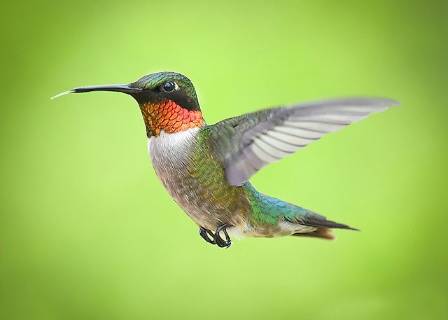
Male hummingbirds commonly possess a brilliantly colored throat area called a gorget. The feathers in this region reflect particular wavelengths of light, producing their strikingly vivid colors.
These throat markings can also help distinguish males of different hummingbird species.
Anna’s Hummingbird displays a brilliant neon-pink throat.
Costa’s Hummingbird is recognized by its violet-colored gorget.
The Magnificent Hummingbird has a green throat.
The Ruby-throated Hummingbird features a striking ruby-red throat.
The Blue-throated Hummingbird shows a vivid blue throat.
Natural Predators
Even with their remarkable speed and aerial maneuverability, hummingbirds are still vulnerable to larger predators.
Known enemies include bullfrogs, praying mantises, and large spiders.
These predators may catch hummingbirds while they are feeding, resting, or simply when the birds are caught off guard.
More from this board
NOTE · en

Places around the world where coconuts grow
Coconuts are almost inseparable from the image of tropical beaches, summer holidays, and island escapes. Picture a shoreline picnic under swaying palms—chances are, a coconut is part of that scene, hanging high above on a coconut tree.
NOTE · en

AI Guides Drones in Uncertain Environments
An autonomous drone tasked with dropping water to fight a wildfire in the Sierra Nevada could face powerful, shifting Santa Ana winds that push it off its intended path. Adjusting to these unpredictable disturbances in real time is a major challenge for any flight control system.
NOTE · en

Best Solid Wood Storage Cabinets for Home & Office
Keeping a home or office organized becomes much easier with the right furniture. A thoughtfully designed storage cabinet not only reduces clutter but also improves the overall appearance and comfort of a room. Among the many storage options available today, solid wood cabinets remain one of the most popular choices because of their durability, timeless style, and ability to blend effortlessly with different interior designs. Whether placed in a bedroom, kitchen, living room, or workspace, a solid wood cabinet adds warmth, character, and functionality.
NOTE · en
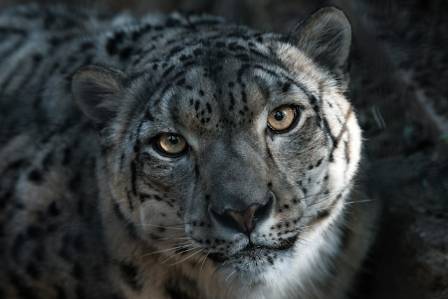
Snow Leopards Have Extremely Low Genetic Diversity, New Study Reveals
A new scientific study suggests that snow leopards have likely always existed in relatively small numbers, which may increase their vulnerability to future environmental changes.
NOTE · en

Perfume Review – Le Labo Lys 41: A Fairytale of Dancing White Florals
Every great fragrance tells a story, and Le Labo’s Lys 41 unfolds like a modern Grimm’s tale—one of three ethereal princesses who steal away each night to dance until dawn on a magical tropical isle. Lily, the eldest and most commanding, glides in a white gown, her green-and-red-streaked hair hinting at the spicy warmth beneath her delicate exterior. Her twin sisters, Tuberose and Jasmine, complete the trio: Tuberose, tall and elegant in white, bears mint-and-black tresses that mirror her cool, faintly smoky menthol scent; Jasmine, short and sweet, is draped in gossamer white-and-yellow velvet, her presence as soft as her aroma. Escorting them is Vanilla, a husky, swarthy boatman whose skin carries the faint, buttery coconut scent of his Tahitian travels—dominant yet gentle, his mood shifting as he watches the sisters dance, their movements light as floating petals, fading from bold vitality to muted exhaustion as the night wears on. This is the world of Lys 41: a celebration of femininity that balances delicacy with diva-like power, a dance of florals and warmth that lingers in the imagination long after the last notes fade. For Le Labo, this scent is more than a blend of ingredients; it’s a narrative in a bottle, one that unfolds uniquely on every wearer’s skin.
NOTE · en

Archipelagos: Definition and Global Examples
When studying islands, you may often encounter the term “archipelago.” While it doesn’t simply mean “many islands,” it refers specifically to a cluster or chain of islands. Let’s explore what an archipelago is and examine some notable examples across the globe.