Monday brief
Latte Art for Beginners: What It Is & How to Make It
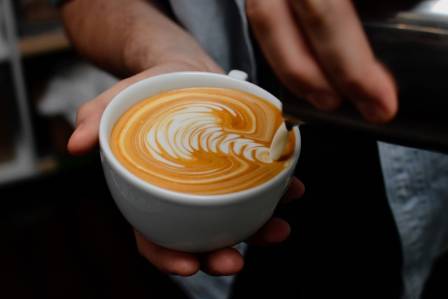
Latte art adds a special touch to coffee and makes every café drink feel more enjoyable. The good news is that you can learn to create beautiful designs at home without professional barista experience. With the right tools and a little practice, anyone can start making latte art.
Calista Bloom
Desk note
Brief tip
The full sticky-note brief continues below on the Monday desk.
Board
Desk Notes
Latte art adds a special touch to coffee and makes every café drink feel more enjoyable. The good news is that you can learn to create beautiful designs at home without professional barista experience. With the right tools and a little practice, anyone can start making latte art.
This beginner-friendly guide explains what latte art is, what equipment you need, and how to create simple designs step by step.
What Is Latte Art?
Latte art is the pattern or design created on the surface of coffee using steamed milk foam. The effect happens because the silky milk foam floats on top of the espresso instead of blending completely into it.
To achieve this, the milk must be steamed into a smooth microfoam texture before pouring it into the drink.
What You Need to Make Latte Art
Coffee Base
You’ll need a concentrated drink base such as:
Espresso
Matcha mixed with a small amount of hot water
Hot chocolate
Strong espresso works best because it provides contrast against the milk foam. Even without a professional espresso machine, you can use tools like a French press or moka pot to create a rich coffee base. Avoid very diluted coffee methods like drip coffee or pour-over for latte art.
Milk
Regular dairy milk is usually the easiest option for creating smooth foam.
Plant-based alternatives such as:
Oat milk
Soy milk
can also work well. Almond milk is generally harder to froth properly for latte art.
Milk Pitcher
A metal milk pitcher with a pointed spout helps control the pour. Many beginners prefer smaller pitchers because they are easier to hold and maneuver.
Frothing Tool
You can use:
A steam wand
A handheld milk frother
Both can create foam suitable for simple latte art.
Mug
Any coffee cup or mug will work.
How to Make Latte Art
Before starting, prepare your espresso, matcha, or chocolate base in your mug.
Pour milk into your frothing pitcher and begin steaming or frothing it. Move the frother or steam wand slightly up and down while heating the milk.
When the tip stays close to the surface, thicker foam forms. Be careful not to raise it too high, or large bubbles will develop.
Understanding Milk Foam Types
There are three common milk textures used for coffee drinks.
Flat White Foam
This is the thinnest foam. Keep the steam wand deeper in the milk to create this silky texture.
Latte Foam
Latte foam is medium-thick and ideal for beginners. Froth close to the milk surface, but not too high.
Cappuccino Foam
Cappuccino foam is the thickest. Keep the wand near the surface longer to create extra foam.
Why Latte Foam Is Best for Beginners
Latte foam is easiest to work with because:
Thin foam disappears quickly
Thick foam pours unevenly and slowly
Medium foam gives better control and helps patterns form more clearly.
Smooth latte foam should look glossy with very few bubbles.
If the milk appears watery, the foam is too thin. If it looks stiff and bubbly, it’s too thick.
Preparing the Milk for Pouring
Once steaming is finished:
Tap the pitcher gently on the counter several times to remove bubbles
Swirl the milk inside the pitcher to create a smooth texture
Hold the pitcher with your dominant hand and tilt the cup slightly toward the pitcher.
Many people find it helpful to grip the handle with three fingers while using the thumb and index finger to steady the spout.
Pouring Latte Art
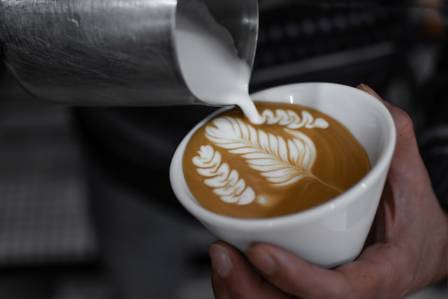
Start pouring from slightly above the cup while moving the pitcher in small circles. This blends the milk into the coffee base evenly.
When the cup is about one-third full, lower the pitcher closer to the surface so the foam begins creating visible patterns.
Start with a Heart Design
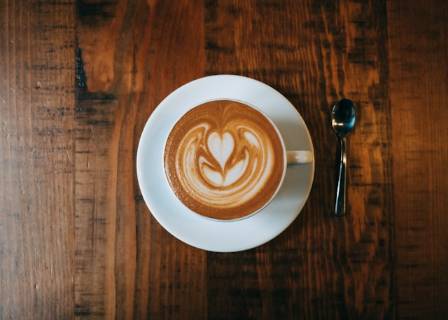
The heart shape is one of the easiest latte art patterns and forms the foundation for more advanced designs like rosettas and swans.
To create a heart:
Pour slowly near the surface
Let the foam spread outward
Push the pour gently forward
Lift the pitcher slightly and draw a thin line through the center
Fixing Imperfect Patterns
If your design doesn’t turn out perfectly, you can adjust it using a toothpick. Dragging the toothpick through the foam can reshape lines and improve the appearance.
Practice Makes Perfect
Learning latte art takes patience and repetition. Don’t worry if your first attempts look uneven or unclear.
Another easy option for beginners is coffee stencil art. Simply place a stencil over the foam and dust cocoa powder or chocolate powder on top to create shapes and designs.
The more you practice pouring milk and controlling foam texture, the easier it becomes to create detailed and creative patterns.
Soon, you’ll be able to move beyond simple hearts and experiment with more advanced latte art designs.
More from this board
NOTE · en

Spaceships and Rockets
A rocket is a vehicle designed to transport spacecraft from the surface of Earth into space, typically to low Earth orbit or farther, and is often referred to as a launch vehicle.
NOTE · en

The Symbolic Swirl: Exploring Donuts’ Meanings in Global Cultures and Celebrations
Donuts are more than sugary treats; they are cultural chameleons, adapting to carry meanings that stretch from ancient rituals to modern pop culture. Their circular shape—endless and unbroken—often symbolizes unity, eternity, and celebration, while regional variations weave them into the fabric of traditions worldwide. This exploration delves into how these fried dough delights serve as edible symbols of joy, community, and nostalgia across continents.
NOTE · en
Bridal Bouquet Style Guide
Throughout centuries, wedding flowers have carried meaningful symbolism, representing fertility, fresh beginnings, love, and happiness in marriage. This custom can be traced back to ancient Greece and Rome, where brides wore or carried floral crowns and arrangements to express hopes for a joyful and prosperous union.
NOTE · en

Enjoy the Leisure Life in the Pastoral Town
A peaceful sanctuary filled with lotus blooms, cool breezes, and refreshing natural scents, the Puzhehei Scenic Area lies in southeastern Yunnan Province, China. In summer, the average temperature stays around 25°C, making it an ideal escape from the heat.
NOTE · en
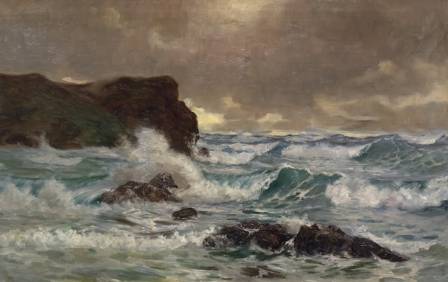
Mastering Coastal Scenery: A Guide to Atmospheric Painting
Capturing the essence of a coastal environment requires a focus on lighting effects and the subtle nuances of the atmosphere. This demonstration explores how to depict a seaside vista inspired by the rugged shores of Wellington, New Zealand. The techniques described are versatile and can be applied effectively using either oil or acrylic paints.
NOTE · en

Incredible Bird Truths to Share with Others
Birds are a constant presence in our lives, whether they are fluttering in our gardens or soaring over the world’s most remote peaks. From casual observers to dedicated ornithologists, there is always more to discover about these feathered marvels. Here are ten surprising and entertaining insights into the avian world that are sure to spark a conversation.