Monday brief
The Northern Lights in North Bay
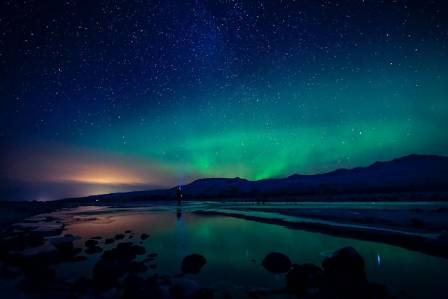
As darkness settles over the north and communities become quieter, especially during the cold months of fall and winter, something remarkable begins to happen overhead: the night sky comes alive. In Northern Ontario, the evening can bring an incredible display of stars and atmospheric activity. With dark sky areas and vast stretches of wilderness surrounding the region, the spectacle may only be beginning when most people are heading indoors for the night.
Eli Warren
Desk note
Brief tip
The full sticky-note brief continues below on the Monday desk.
Board
Desk Notes
As darkness settles over the north and communities become quieter, especially during the cold months of fall and winter, something remarkable begins to happen overhead: the night sky comes alive. In Northern Ontario, the evening can bring an incredible display of stars and atmospheric activity. With dark sky areas and vast stretches of wilderness surrounding the region, the spectacle may only be beginning when most people are heading indoors for the night.
A clear, star-filled sky can already be an impressive sight, but every so often, it receives an extraordinary addition. If you are fortunate enough to witness the aurora, the experience can be mesmerizing and may leave you hoping to see it again.
What Causes the Northern Lights?
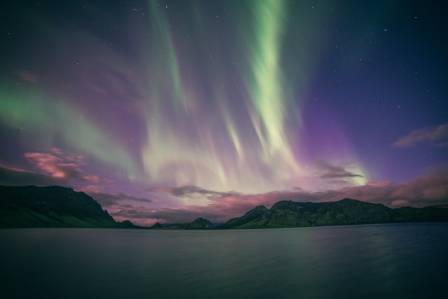
The Aurora Borealis, commonly called the Northern Lights, is a spectacular natural phenomenon in which colorful ribbons of green, red, purple, and blue appear to move across the night sky.
The display begins with charged particles released by the sun. Solar winds carry these particles toward Earth's magnetic field, where they interact with gases in the atmosphere, producing the glowing lights most commonly associated with the polar regions.
The colors that appear depend partly on the altitude at which the collisions occur. Higher-altitude interactions can produce red light, while lower-altitude activity can result in blue. Green and purple shades can occur between these levels, while different atmospheric gases are responsible for producing different colors when energized.
Seeing the Northern Lights is an unforgettable experience, and staying awake a little later is certainly worthwhile. But when exactly should you go looking for them, and where are the best places to watch?
When to See the Northern Lights in Ontario
The aurora is often particularly active around the equinoxes, which occur twice each year when the sun crosses the Earth's equator. These periods generally fall around March and April in spring and September and October in autumn, and they can coincide with increased geomagnetic activity.
Because the Northern Lights are most commonly associated with the polar regions, northern parts of Canada offer excellent opportunities for viewing them. North Bay is one such location. The city is approximately a 3.5-hour drive north of Toronto and about four hours west of Ottawa. It sits along Lake Nipissing and Trout Lake, beneath the Laurentian Escarpment.
If you are unsure when the aurora might appear, there is no need to guess. Astronomers and researchers publish aurora forecasts that can help you determine when activity is likely.
On a clear evening, particularly between about 10 p.m. and 2 a.m., gather some warm blankets, bring your camera, and head somewhere with a good view of the northern sky.
The best viewing conditions involve clear skies and as little surrounding light as possible. A bright moon can also make the aurora harder to see, so nights when the moon has not yet risen or has already set can be especially favorable.
Winter provides considerably more hours of darkness, increasing the amount of time available for aurora watching. For this reason, clear and dark evenings during fall and winter can offer excellent opportunities to search for the Northern Lights.
Where to See the Northern Lights in Ontario
Northeastern Ontario offers excellent conditions for aurora viewing, and North Bay provides numerous locations where visitors can get away from artificial light.
Surrounded by forests and open wilderness, the area has many places where you can set up a camera, bring a comfortable chair, and wait for the sky to put on its nighttime display.
Nordic Ski Club
The North Bay Nordic Ski Club on Northshore Road encompasses an extensive network of trails and wooded areas. It is less than 20 minutes from central North Bay, making it relatively easy to escape the city's artificial lights and find a darker view toward the northern sky.
During autumn, the experience can be especially beautiful, with colorful foliage surrounding you while the aurora moves overhead.
In winter, you can bring snowshoes or skis and follow one of the trails to find a quiet location away from the city where you can watch the lights.
Laurentian Escarpment Conservation Area
The Laurentian Escarpment Conservation Area surrounds North Bay and offers some of the region's most scenic viewpoints. Several maintained trails provide access to elevated areas where visitors can enjoy expansive views.
Because you are above much of the city, artificial light is less intrusive in some areas. This makes the conservation area a convenient place to look for the colorful movements of the Aurora Borealis without traveling far from North Bay.
Laurier Woods Conservation Area
Located within North Bay itself, Laurier Woods Conservation Area covers approximately 250 acres and provides a relatively open view of the sky with limited interference from city lights.
For anyone hoping to see the aurora without making a long trip outside town, this conservation area can provide an accessible option. Its combination of open sky and surrounding natural landscape creates a peaceful setting for nighttime viewing.
La Vase Portage Conservation Area
La Vase Portages is not only historically significant but can also be an appealing destination for Northern Lights viewing. The area provides broad stretches of sky, with views extending across almost 360 degrees in some locations.
For an even darker setting, visitors can make their way toward Elks Lodge #25 Family Park Conservation Area, where getting farther from artificial lighting allows more of the night sky to become visible.
North Bay Waterfront
The North Bay Waterfront is one of the city's best-known attractions and offers an easy way to enjoy the outdoors without traveling far from downtown.
With modern life often becoming increasingly busy, the waterfront provides a peaceful place where locals and visitors can slow down and enjoy the surroundings. It is also only a short walk from Downtown North Bay.
For aurora watchers, the waterfront offers another advantage: you can potentially see the Northern Lights without leaving the city center. While darker locations may provide better conditions, the waterfront can be a convenient option when the aurora becomes active.
Callander
Just around 10 minutes south of North Bay is the community of Callander, situated along Callander Bay, which forms part of Lake Nipissing.
With views toward the northwest and relatively little light pollution, the bay can be a beautiful place to search for the aurora. Sitting beside the lake with a camera ready allows you to enjoy both the reflection of the landscape and the expansive night sky while waiting for the lights to appear.
Algonquin Park
The northwestern corner of Algonquin Park is also within reach of North Bay and provides another possibility for those hoping to add the Northern Lights to their travel bucket list.
Check the aurora forecast before making the trip, then use North Bay as a base and plan an excursion into Algonquin Park. Camping in or near the park can provide an opportunity to experience the dark wilderness landscape while keeping an eye on the night sky.
Join Other Aurora Enthusiasts
If you are particularly interested in the Northern Lights and would like to connect with other people who share that interest, the North Bay Astronomy Club organizes regular events and gatherings related to astronomy and aurora watching.
There are also numerous resources available for monitoring aurora activity and checking upcoming forecasts. By keeping an eye on the predictions, arranging accommodation in advance, and choosing a location away from excessive artificial light, you can give yourself a much better chance of experiencing one of nature's most spectacular nighttime displays.
When the conditions are right, head outside, look north, and wait for the sky to begin its show.
More from this board
NOTE · en

Watercolor Flowers Made Easy
I have a real love for painting flowers with watercolor. Many people are surprised by how bright, dimensional, and lifelike watercolor florals can appear, and I’m often asked how I achieve that effect.
NOTE · en

The World's Most Beautiful Coastal Cities
Creating a list of the most beautiful coastal cities in the world was not an easy task. We originally considered 15 different destinations, but after many discussions and comparisons, the selection was narrowed down to six and finally four. These four cities stood out because of their unique combination of ocean views, natural landscapes, architecture, and unforgettable atmosphere.
NOTE · en

10 Creative Ways to Use Strawberry Tops
Don’t toss those strawberry tops in the trash just yet—these leafy bits are surprisingly versatile. Instead of wasting them, try one of these clever ways to give strawberry tops a second life, both in the kitchen and beyond.
NOTE · en
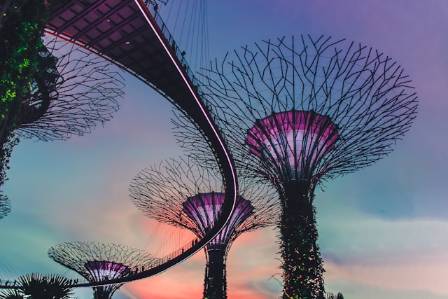
7 Fascinating Design Secrets of Singapore’s Garden by the Bay
Singapore’s Garden by the Bay is more than a park—it’s a futuristic blend of landscape artistry, advanced technology, and sustainable innovation. Opened in 2012, this 101-hectare oasis has become one of the nation’s most celebrated attractions, drawing millions of visitors annually. Here are seven design highlights that reveal why it remains such a global icon.
NOTE · en
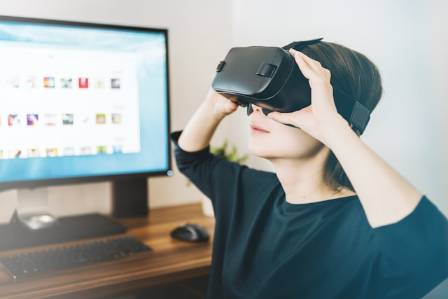
Essential Facts Regarding Virtual Reality Headsets
Virtual reality (VR) utilizes visual and auditory signals, along with other sensory data, to construct a deeply immersive, digital surroundings. By fully shielding a person's eyes and often their ears, VR headsets plunge the individual into an artificial experience. These devices monitor head rotations and tilt, which enhances the sensation of "presence" by enabling users to scan their virtual surroundings naturally, just as they would in the physical world. Within educational contexts, these headsets offer the chance to engage in powerful simulations and safe training exercises, permitting students to investigate subjects and environments that would be impossible to access within a standard classroom.
NOTE · en
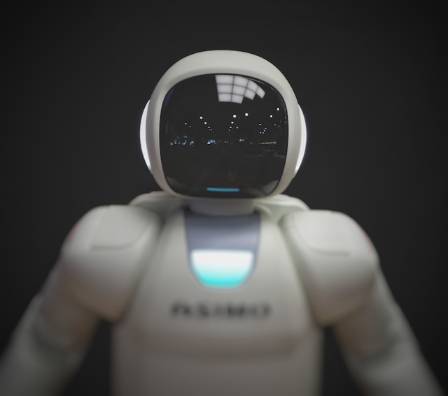
Advancing Industrial Robotics: High-Performance Automation for Unstructured Environments
Modern global commodity markets are increasingly competitive, placing significant strain on both conventional production methods and the human workforce. While safety expectations in the mining and metals sectors are rising, the physical demands on operators often subject them to substantial risks. Many of these roles require human judgment and dexterity that are notoriously difficult for standard machines to replicate, making complete automation a persistent challenge.