Monday brief
Elbphilharmonie Hamburg – Spectacular architecture for a boundless music experience
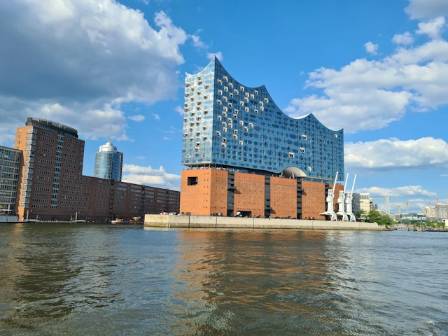
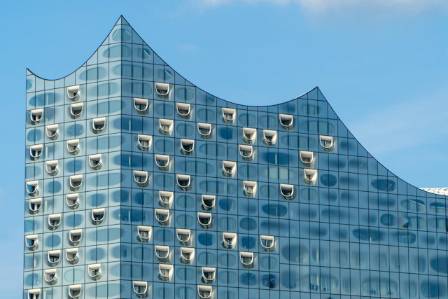
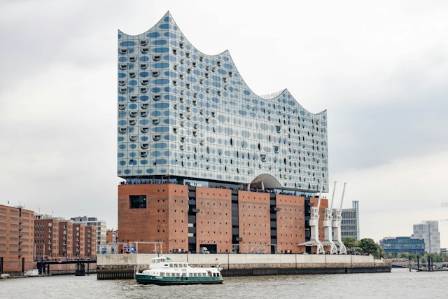
The Elbphilharmonie was created by the celebrated Swiss architectural practice Herzog & de Meuron. Rising above a brick warehouse base known as the former Kaispeicher A, the building combines Hamburg’s industrial heritage with a strikingly modern design. The original warehouse was constructed at the harbor between 1963 and 1966 and was once used to store commodities such as tea, tobacco and cocoa. Above this historic foundation, the glass upper structure rises approximately 110 metres into the Hamburg skyline, crowned by a distinctive roofline that resembles ocean waves.
Selwyn Pierce
Desk note
Brief tip
The full sticky-note brief continues below on the Monday desk.
Board
Desk Notes
The Elbphilharmonie was created by the celebrated Swiss architectural practice Herzog & de Meuron. Rising above a brick warehouse base known as the former Kaispeicher A, the building combines Hamburg’s industrial heritage with a strikingly modern design. The original warehouse was constructed at the harbor between 1963 and 1966 and was once used to store commodities such as tea, tobacco and cocoa. Above this historic foundation, the glass upper structure rises approximately 110 metres into the Hamburg skyline, crowned by a distinctive roofline that resembles ocean waves.
Located at the western end of HafenCity, one of Europe’s largest inner-city redevelopment projects, the Elbphilharmonie stands directly beside the historic Speicherstadt warehouse district, which is recognized as a UNESCO World Heritage site. Its unusual combination of old brickwork and contemporary glass makes the building a powerful representation of Hamburg’s history, present-day identity and ambitions for the future.
The building reflects Hamburg’s long-standing tradition of taking what already exists and transforming it into something new. At the same time, it embodies the many contrasts that define the city, bringing together historic architecture and contemporary design, commercial heritage and cultural life, and tradition and innovation.
A City Shaped by Music
Hamburg’s reputation as a city of music reaches back to the 17th century. In 1678, Europe’s first public opera house opened its doors on the Gänsemarkt, establishing an important musical tradition that continues today.
Modern Hamburg has an exceptionally varied music scene. The city is home to three professional orchestras, respected solo musicians and chamber ensembles, as well as performers working in jazz, rock, pop, electronic music and many other genres. The city also has composers, singer-songwriters and several well-established institutions dedicated to musical education.
As one of Hamburg’s defining cultural landmarks, the Elbphilharmonie provides a stage for many of these artists and ensembles. For some, it is more than simply a performance venue. The NDR Elbphilharmonie Orchestra serves as the orchestra in residence in the Grand Hall, while Ensemble Resonanz holds a residency in the Recital Hall.
Hamburg’s residents have always had a strong connection with both their city and its music. Because Hamburg was historically not governed by kings or princes, its citizens played an especially important role in shaping the city’s musical culture.
Music venues outside the control of the church began developing as early as the 18th century. One of the city’s most impressive concert venues, the Laeiszhalle, opened in 1908 and was designed in the neo-Baroque style.
Before the Second World War, the Laeiszhalle was not Hamburg’s only major location for symphonic performances. The Conventgarten, which was destroyed in 1943, was capable of accommodating an even larger audience.
The arrival of the Elbphilharmonie greatly expanded Hamburg’s concert capacity. Beyond becoming an architectural highlight and a major city landmark, it has given Hamburg another opportunity to strengthen its standing as an important international center for music.
Hamburg’s Long Classical Music Tradition
Classical music has deep roots in Hamburg. The Oper am Gänsemarkt opened in 1678 and became the first civic theater in Germany, marking an important moment in the history of public musical performance.
Hamburg also honors the composers who lived and worked in the city. Near St Michael’s Church, affectionately known by locals as the “Michel,” the Composers’ Quarter was established through the efforts of committed citizens and organizations. The site pays tribute to musicians associated with Hamburg, including C. P. E. Bach, Johannes Brahms, Gustav Mahler and Georg Philipp Telemann.
Telemann in particular played a major role in the musical development of the early 18th century, and his work helped shape the musical culture of his era.
However, Hamburg’s identity as a musical city extends far beyond classical music.
The Beatles, for example, made an important early chapter of their career in Hamburg. From August 1960 through December 1962, the young band performed at various clubs around the Reeperbahn. Their appearances helped establish the area’s reputation as a legendary center for live music.
The tradition continues today. Emerging bands from around the world still perform in the clubs around the Reeperbahn, particularly during the annual Reeperbahn Festival. With stages spread across more than 70 venues, the event is considered Europe’s largest club festival and provides an important platform for artists who may become tomorrow’s stars.
Music at the Elbphilharmonie
The Elbphilharmonie was principally conceived as a concert venue for music performed without amplification. Its two main halls reflect this purpose. The Grand Hall can accommodate around 2,100 people, while the Recital Hall seats up to approximately 550.
Both halls are acoustically separated from the rest of the building. Their primary programs include orchestral performances, chamber music and solo recitals, genres in which the natural sound of instruments and voices can be experienced without electronic amplification.
At the same time, the Elbphilharmonie does not limit itself exclusively to these traditional forms. Jazz, world music, pop and singer-songwriter performances are also regularly presented. Although these concerts occur less frequently than classical performances, they form an important part of the venue’s artistic identity.
The Elbphilharmonie also takes an expansive approach to the idea of classical music. Its programs can span centuries, moving from early polyphonic works to compositions created in the modern era.
The contemporary architecture created by Herzog & de Meuron, based in Basel, is particularly well suited to music from the 20th and 21st centuries. For this reason, new and contemporary compositions occupy an important place in the programming of both halls.
Classical works originating outside European musical traditions are also included, adding further cultural variety to the program.
Bringing Music to the Community
The Kaistudios, located within the historic brick warehouse, were created to make music accessible to people throughout Hamburg, regardless of age or educational background.
One of the education department’s most valuable resources is the World of Instruments, a carefully assembled collection that allows visitors to actively explore musical instruments. The selection ranges from an alpenhorn and kettledrum to an iPad, recorder, violin and tuba.
Rather than simply observing instruments, visitors have the opportunity to experiment with them and discover music through direct experience.
The Kaistudios host courses and concerts designed for schoolchildren and also provide rehearsal facilities for four community ensembles.
The Audience Orchestra and Family Orchestra bring enthusiastic amateur musicians together to perform under professional guidance. The Gamelan Ensemble gives people without previous musical experience an opportunity to learn how to play together relatively quickly.
The Creative Orchestra takes another approach, encouraging participants to create collective musical processes without requiring a predetermined result. Even people with no previous musical training can take part and contribute to the experience.
Leonard Bernstein is often associated with the idea that music can ultimately be divided into good music and bad music. Following a similar philosophy, the Elbphilharmonie presents itself as a place dedicated to good music rather than being restricted by a single genre or artistic tradition.
The NDR Elbphilharmonie Orchestra is based in the Grand Hall as its orchestra in residence, while Ensemble Resonanz has its residency in the Recital Hall.
Experience Hamburg from Above
The Plaza serves as the central gathering point within the Elbphilharmonie and creates a physical connection between the historic warehouse below and the modern glass structure above.
The viewing platform is open to the public, meaning visitors do not necessarily need to attend a concert to experience this part of the building.
Even reaching the Plaza is part of the experience. An approximately 80-metre-long, gently curved escalator carries visitors through the interior of the building.
At around 37 metres above ground level, the Plaza opens onto a spectacular panorama of Hamburg and its harbor. An outdoor walkway circles the entire building, allowing visitors to take in the surrounding scenery from different perspectives.
Inside the Plaza area are the hotel lobby, the Elbphilharmonie shop, a dining area and access routes leading toward the concert halls.
The Plaza welcomes both Hamburg residents and visitors from elsewhere. Whether someone has come specifically for a concert or simply wants to experience the architecture and views, the space offers an opportunity to encounter the Elbphilharmonie.
The Heart of the Elbphilharmonie
At the center of the Elbphilharmonie is the Grand Concert Hall.
Its approximately 2,100 seats surround a centrally positioned stage in an arrangement inspired by terraced vineyards. This configuration brings the audience unusually close to the performers, with no seat located more than about 30 metres from the conductor.
The intimate distance between performers and listeners contributes to the distinctive character of the hall and creates a setting designed for memorable musical experiences.
To achieve the necessary acoustic conditions, the architects worked with internationally recognized acoustician Yasuhisa Toyota to develop a specialized wall and ceiling system known as the “White Skin.”
Around 10,000 individually shaped gypsum-fiber panels were manufactured with extremely precise dimensions. Together, these panels help distribute sound throughout the hall so that music can reach every part of the audience area.
The Grand Hall also contains a remarkable concert organ created by the Bonn-based Klais organ-building company. It has 4,765 pipes positioned among, beside and behind the audience seating.
An additional remote console with four registers is positioned within the reflector above the stage, adding another element to the hall’s sophisticated musical infrastructure.
The Recital Hall
The upper section of the Elbphilharmonie contains the Recital Hall, a smaller and more intimate performance space.
Its acoustics are supported by carefully shaped wooden panels designed by Yasuhisa Toyota. The hall can accommodate approximately 550 people and is particularly suitable for chamber music, lieder and solo recitals.
It is also used for jazz and world music performances.
Because the seating arrangement can be adapted, the Recital Hall is flexible enough to accommodate a wide range of musical and cultural events.
A Music Experience Without Boundaries
Making music accessible, welcoming and available to people from different backgrounds was essentially part of the Elbphilharmonie’s concept from the beginning.
Its concert schedule therefore embraces a wide variety of sounds, styles and traditions rather than following a narrowly defined artistic direction.
The program includes orchestral performances and opera productions involving some of the world’s leading ensembles, as well as piano recitals, string quartets and lieder performances.
Alongside these classical offerings are world music, electronic music and pop.
Internationally recognized performers contribute to the cultural energy of the concert hall, while musicians and ensembles from Hamburg itself remain equally important to its identity.
The NDR Elbphilharmonie Orchestra has established itself as the orchestra in residence, while the Recital Hall gives Ensemble Resonanz a dedicated home for its concert program, particularly its focus on contemporary music.
Music for Everyone
The Elbphilharmonie is therefore much more than a traditional classical concert venue.
As a gateway into the wider world of music, it places significant emphasis on education and participation. Its extensive educational program includes concerts designed for children and families, hands-on projects and workshops intended for people of different ages.
These activities transform the building into an active cultural meeting point where people can encounter music in many different ways.
Spectacular architecture, musical variety, openness and accessibility all come together at the Elbphilharmonie.
The building brings together many of the qualities associated with Hamburg itself, combining historic foundations with contemporary ideas and connecting the city’s local traditions with its role as a gateway to the wider world.
In this way, the Elbphilharmonie represents not only Hamburg’s musical culture but also the city’s long-standing desire to preserve its heritage while continually looking toward the future.
More from this board
NOTE · en

The Best Portable Projectors in 2026
Portable projectors have evolved rapidly in recent years, bringing significant improvements in image quality, brightness, smart features, and mobility. The latest generation of projectors released in 2026 delivers a better viewing experience than ever before, whether you're hosting an outdoor movie night, traveling, or creating a flexible home theater setup.
NOTE · en
10 Unforgettable Things to Do in Colmar, France
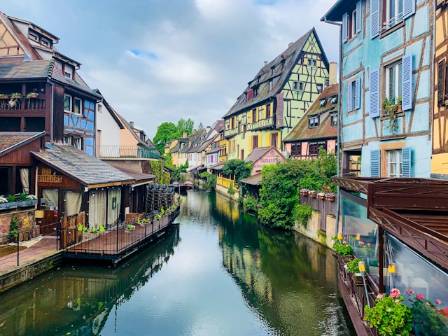
Colmar in Alsace feels like a scene from a storybook, with flower-lined canals, timber-framed cottages, and cobbled streets. To capture its full charm, here are ten experiences you shouldn’t miss when exploring this colorful gem of northeastern France.
NOTE · en

Essential Knowledge Regarding Planet Earth
Earth is a remarkable world, serving as our home in the vastness of space. While we inhabit this planet daily, its physical characteristics, history, and movement through the solar system involve complex scientific processes. The following overview details the fundamental nature of Earth, from its ancient origins to its unique ability to sustain life.
NOTE · en
The Five Most Renowned Landmarks in France
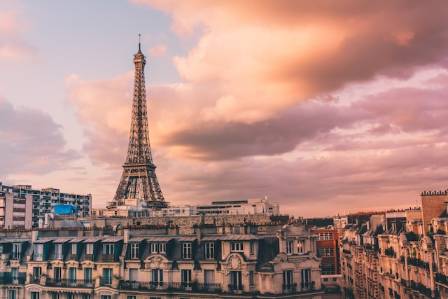
France is renowned for its rich history and stunning landmarks, many of which are concentrated in Paris. However, beyond the capital city, the entire country boasts a wealth of historical treasures, each telling a unique story and leaving a lasting impression on visitors. Here are five must-visit landmarks that epitomize France's cultural and architectural significance:
NOTE · en

Understanding Bichon Frise Traits and How to Care for Them
The Bichon Frise is a small non-sporting dog breed with long, curly white fur that makes its dark eyes and nose stand out prominently. Many people describe Bichons as fluffy as cotton balls, often comparing them to “living stuffed animals.” These dogs are energetic and people-focused, disliking being left alone for extended periods. One of their favorite places to be is usually curled up in their owner’s lap, enjoying close companionship.
NOTE · en

How Playful Geometric Building Blocks Can Redefine Modern Architecture
Architecture is much more than simply completing a physical building because a profound design concept retains its universal value even if it remains unbuilt. A unique structural framework developed in the early 1980s demonstrates how elementary shapes can be successfully applied to both educational workshops and real-world residential construction. This innovative design methodology has been shared with children and families in interactive community workshops over the years, encouraging participants to build unique physical objects using fundamental geometric components to discover the joy of spatial creation.